
Welcome to
Heritage Family Eye Care
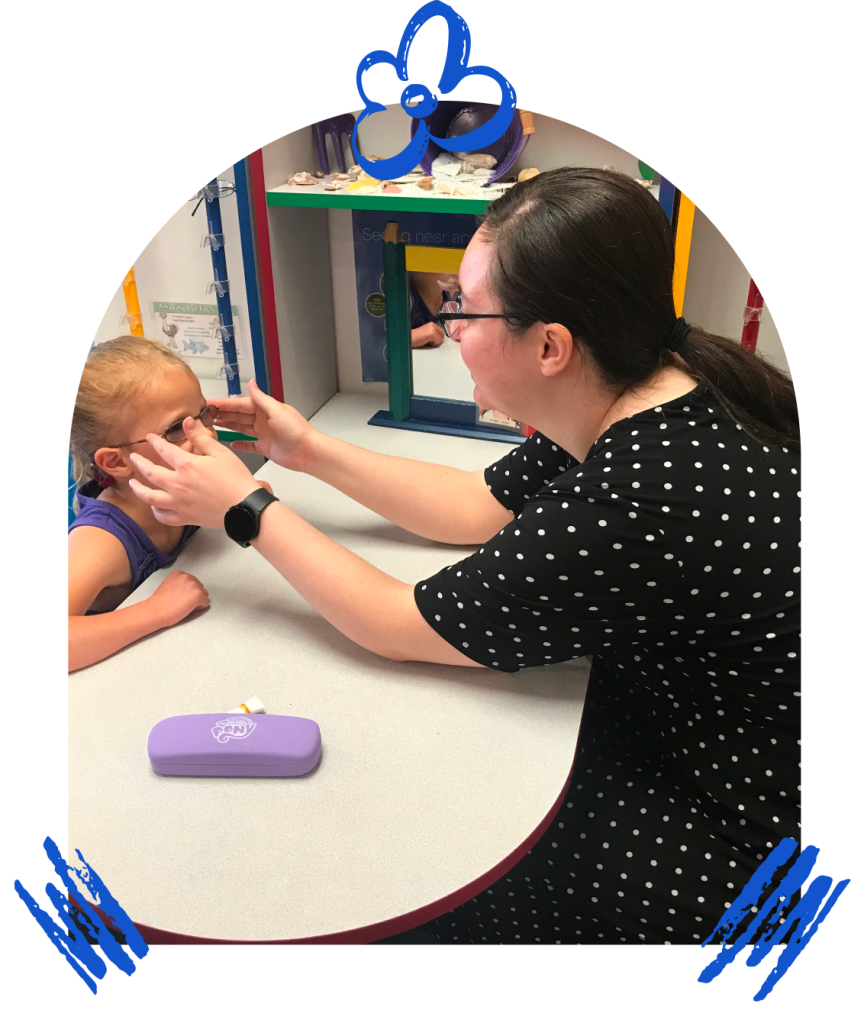
Here at Heritage Family Eye Care, Dr. Heather Gebhart and Dr. Sara Huffman specialize in pediatric optometry. We believe in providing our patients with a very thorough eye examination. Your child’s vision and ocular health will be thoroughly evaluated by the doctors.
We are currently accepting new patients!
Thank you for choosing our office for your child’s vision care! In order to provide the best care, please print and fill out a New Patient form.
EXAMINATIONS
There are two types of eye examinations offered for children
A comprehensive eye examination is recommended for children at 6 months of age, 3 years of age and annually during school age.
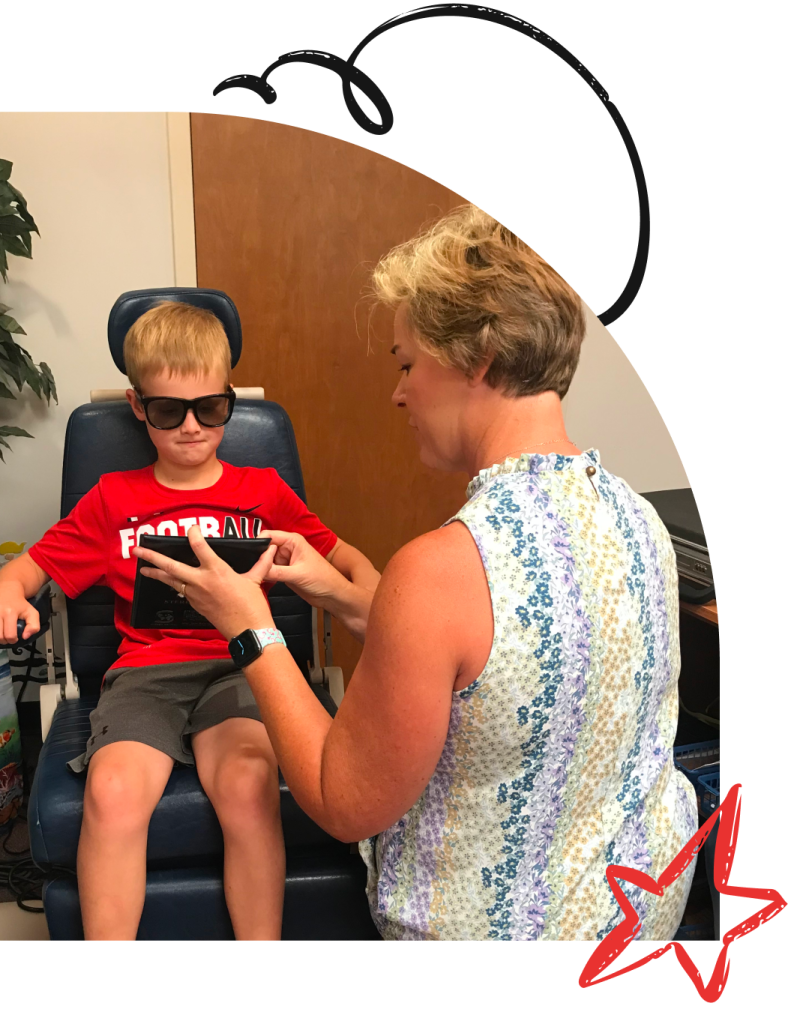
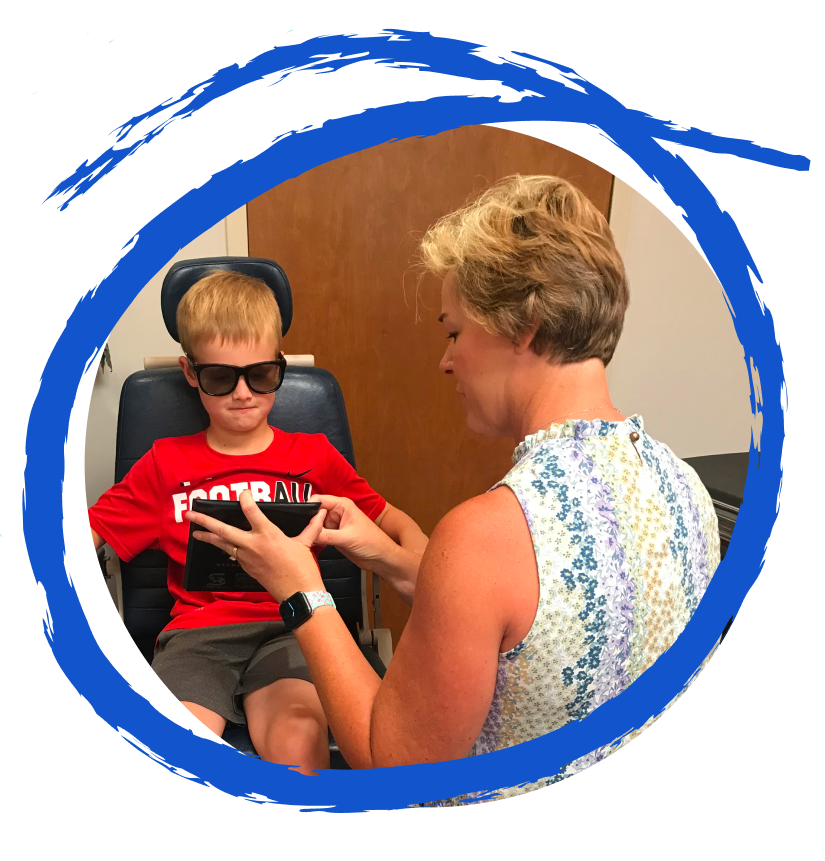
A sensorimotor eye examination includes all of the testing done in the comprehensive exam plus additional binocular vision and visual processing testing. Sensorimotor examinations are recommended for school age children who are having specific difficulties learning.
LOOKING CLOSER
Here are some of the things we take a look at

Vision & Learning
Studies have shown that 80% of learning is visual. It only makes sense that if a child has an untreated vision problem, they will have more difficulty learning.
Children should have a comprehensive eye examination prior to starting school in order to rule out any major problems. The doctors will evaluate the focusing system very thoroughly as it is critical in the learning process. They test how much focusing your child is able to do, how accurately your child focuses and how easily they can change their focus from far to near and near to far. They also evaluate how well your child is using their eyes together as a team. In order to see clearly and singly, the eyes have to be well coordinated. This also affect eye movements and depth perception. Even if a child does not have an obvious eye turn, they may not be using their eyes together properly.
This becomes a major issue when they are under stress or becomes fatigued. The following are signs and symptoms of binocular vision problems: eyestrain, headaches, a head turn, or tilt, double vision, words moving or going in and out of focus, frequent loss of place when reading, avoidance near work and frequent eye rubbing.
Farsighted
Farsighted children have an easier time seeing far away objects than near-point details. It is caused by the eye being too short or the cornea/lens power being too weak (curvature/thickness). A farsighted child must exert extra focusing power in order to see clearly. They do this by using the focusing muscles that are normally just used to focus up-close. They must then focus even harder to see a near-point target.
Farsightedness has been closely linked to developmental delays, difficulty with learning, and increased risk for developing a number of binocular vision disorders. These children almost always pass vision screenings. Farsightedness is best detected by doing a dilated (or cycloplegic) refraction.
Nearsighted
Nearsighted children cannot see far away. This is caused by the eye being too long or the cornea/lens power being too strong. Nearsightedness is easily detected because these are the children who fail vision screenings, can’t see street signs, score boards, etc. Nearsightedness typically does not cause learning problems.
Astigmatism
This type of refractive error is generally caused by the cornea (the front surface of the eye being shaped more like a football than a basketball). This causes meridional defocus. For example, the vertical line of an “E” may be clear, while the horizontal lines are blurred. Small amounts of “with-the-rule” astigmatism are common. Larger amounts of “with-the-rule” and small amounts of “against-the-rule” and oblique astigmatism can cause problems with focusing, eye teaming skills, and can even cause amblyopia, (lazy eye).
Vision & Learning
Amblyopia is also know as “lazy eye”: however, it does not necessarily mean that there is an eye turn. Amblyopia occurs when something prevents the vision from developing on one eye or both eyes. It is the leading cause of preventable blindness in the United States. The following are amblyogenic factors (causes of amblyopia): high or unequal refractive error, an eye turn, an opacity (i.e. a cataract or a scar), a ptosis (eyelid droop). Amblyopia is treatable. It is best treated at a young age. Outcomes are not as good when treatment is administered as a teenager or an adult.
Meet the Doctors
Dr. Heather Gebhart O.D, F.A.A.O
Undergrad – Ashland University, Ashbrook Scholar Cum Laude
Ohio State School of Optometry
University of Houston College of Optometry Pediatric Residency

Dr. Sara Huffman O.D, F.A.A.O
Undergrad – Denison University, Bachelor of Science in Biochemistry
Ohio State School of Optometry
University of Houston College of Optometry, Pediatric Optometry & Binocular Vision Residency
 Heritage Family Eye Care